
AIM Research · specialised in data and AIIndependent · Analyst-led · Vendor-neutral

    PeMa Quadrant · Published May 12, 2026
    Why Enterprise AI Maturity Models Mislead

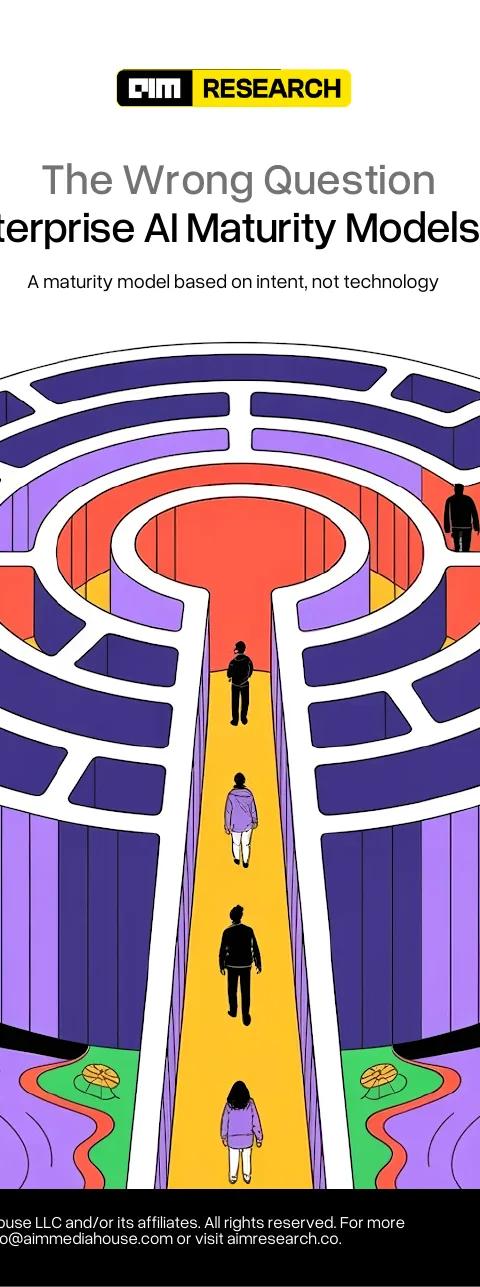
    Why Enterprise AI Maturity Models Mislead report cover

    Free for a limited time

    Get the full report

    Vendor profiles, scores and the full quadrant. Four quick fields.

    Hundreds of professionals have accessed it

    What the report finds

    5 shifts buyers should know

    01

    Current AI maturity models focus on technological capability rather than strategic intent.

    Finding 1 of 5

    02

    The Strategic Intent Ladder separates capability from intent, focusing on business transformation.

    03

    Many enterprises misalign their AI investment with their strategic intent.

    04

    The transition from Stage 2 to Stage 3 is the hardest due to governance challenges.

    05

    Stage 4 requires a board willing to fund a future that may hurt the present.

    Abstract

    The report 'Why Enterprise AI Maturity Models Mislead' critiques current AI maturity models, arguing that they focus too much on technological capability rather than strategic intent.

    Traditional models often measure an enterprise's AI maturity based on the number of models, governance, and MLOps maturity, without addressing the crucial question of how AI is transforming the business. The report introduces an alternative model, the Strategic Intent Ladder, which separates capability from intent and focuses on what AI is changing about the business. This model comprises five stages: Cost Optimisation, Process Reinvention, Product & Experience Differentiation, Business Model Reinvention, and AI as the Enterprise. Each stage is defined by the strategic question leadership is asking, the metric that proves success, and the source of the value AI is creating. The report emphasizes that the real challenge is aligning the intent with the investment, as many enterprises talk about higher stages of AI maturity but fund lower-stage activities. It also highlights the importance of imagination and strategic intent in leveraging AI for business transformation.

    Methodology

    How vendors were scored

    The research was conducted by AIMResearch, utilizing data believed to be reliable.

    X axis

    Market penetration

    • Delivery scale
    • Financial health
    • Customer mindshare

    Y axis

    Technology maturity

    • Technical innovation
    • Value realisation
    • DataOps depth

    The research was conducted by AIMResearch, utilizing data believed to be reliable. The scope includes an analysis of current AI maturity models and the introduction of an alternative model, the Strategic Intent Ladder. The evaluation approach involved examining the strategic intent and investment alignment in enterprises, with insights drawn from industry scenarios across various sectors.

    Full report · PDF

    Get the vendor profiles, scores and full quadrant

    Free for a limited time. The PDF arrives in your inbox.

    Frequently asked questions

    The PeMa (Penetration and Maturity) Quadrant is AIM Research's 2x2 vendor evaluation framework. It measures each provider's market penetration (clients, deal sizes, geographic spread) and technology maturity (capabilities, platforms, partnerships), and places them as Leaders, Seasoned Vendors, Growth Vendors or Challengers.

    Any enterprise technology vendor active in the relevant market category can request to participate. AIM Research issues an open RFI for each study and invites qualifying vendors via the Research Calendar.

    Vendors are evaluated through a structured RFI process backed by primary research, including vendor briefings, customer references and product evaluations. They are scored across 40+ weighted criteria covering product capabilities, strategy and market impact, and the weighted scores are mapped to one of the four quadrant positions.

    The date of the next edition has not been announced yet. Upcoming studies and their RFI windows are listed on the AIM Research Calendar.

    Current AI maturity models are critiqued for focusing too much on technological capability rather than strategic intent. They often measure maturity based on the number of models and governance without addressing how AI is transforming the business.

    The Strategic Intent Ladder is an alternative model introduced in the report that separates capability from intent. It focuses on what AI is changing about the business and comprises five stages: Cost Optimisation, Process Reinvention, Product & Experience Differentiation, Business Model Reinvention, and AI as the Enterprise.

    Aligning intent with investment is crucial because many enterprises talk about higher stages of AI maturity but fund lower-stage activities. This misalignment can lead to strategic disappointment, as the AI delivers exactly what was funded, not what was intended.